The Fifth Wall – Jewish Playwriting – Issue #16

Read more on "The Fifth Wall – Jewish Playwriting – Issue #16" »

גליון 16עלון המחזאות הישראליתקישור לקריאה

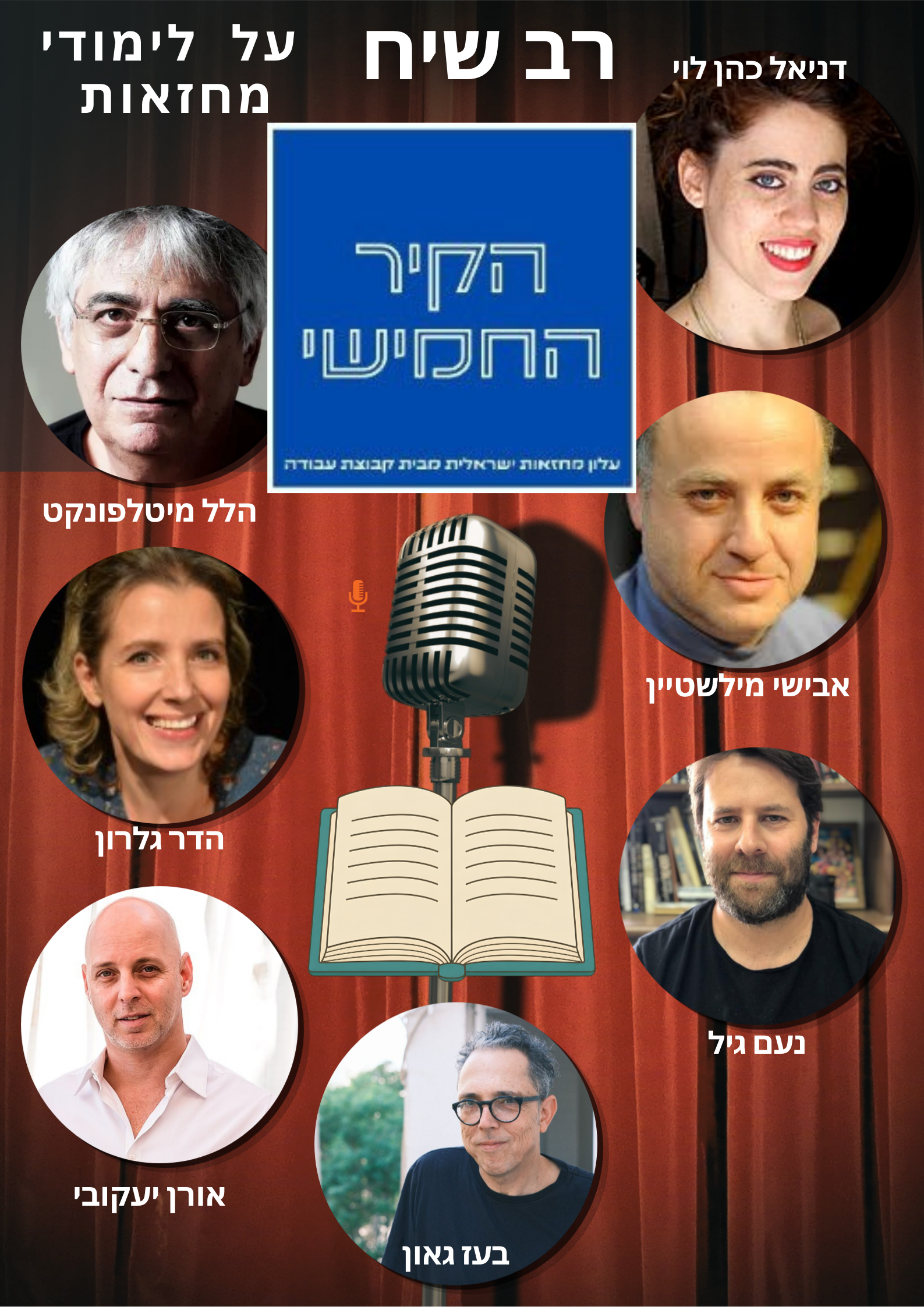
The discussion of Judaism and theater spans a spectrum ranging from the claim that theater, as a product of ancient Greek culture, stands in opposition to the Jewish worldview, to the claim that modern world theater, as we know it today, is in large part a Jewish medium. To begin, we asked you two weeks ago what Jewish playwriting means to you. The poll is still open if you want to test yourselves, but if you want to jump straight to the results, we will present them later here. Here too, the views are very diverse, but one thing is clear: it is impossible to discuss Jewish playwriting without engaging deeply with questions of identity. For that purpose, we have brought together a fascinating roundtable of seven playwrights with different perspectives on the subject, added an article on the ethics of theater according to Yossi Yizraeli and the sources with which he is in dialogue, an article on the new and surprising encounter between the theater medium and the Haredi public, and, finally, a historical overview of the development of Jewish playwriting outside Israel, its impact on us as Israelis, and its role in shaping contemporary world theater.


Everybody Needs A Homeland – Christian Gampert on ISRADRAMA 2025

Read more on "Everybody Needs A Homeland – Christian Gampert on ISRADRAMA 2025" »

Everybody Needs A Homeland
ISRADRAMA 2025

Christian Gampert

Frankfurter Allgemeine Zeitung-   7.4.2026

The “Isradrama” Festival in Tel Aviv immerses us in the traumatization of Israeli society after October 7  yet still leaves room for self-criticism, women’s emancipation, and even reincarnation…

Dim lighting. A thin figure in a nightgown, with disheveled hair, gropes through the nearly dark space and bumps into hanging metal rods. The vibrating sounds escalate electronically into a warlike inferno. The figure grows frightened and blows into a strange long-necked trumpet that sounds like a siren. Air raid alarm? The figure goes to bed and pulls the blanket over its head. But the bed is actually a wardrobe converted into a coffin, into which the figure will soon fall. It is already lying in its grave.

Thus begins actor Losha Gavrielov’s solo piece, which, despite everything, is called “Light” – at some point there will be light in these dark times. Over the course of the performance, Gavrielov transforms from a frightened civilian into a soldier who must armor himself with scattered car fenders. And yet still chases butterflies. Gavrielov, who runs the “Davai” Theater (“Come on!”) on the edge of Jaffa together with his equally eccentric colleagues Fyodor Makarov and Vitaly Azarin, is a Beckett-like figure. He does not speak a single word throughout the performance. Although he originally conceived the piece in response to Putin’s invasion of Ukraine, it is now, in Tel Aviv, inevitably read in the context of the wars with Gaza, Lebanon, and Iran.

The audiences of the “Isradrama” festival who were able to visit these three virtuoso clowns – immigrants from Russia – in Jaffa were fortunate: without the ceasefire brought about under pressure from Donald Trump, the festival could not have taken place. As absurd as it may sound, “suddenly peace broke out,” said playwright-actress and festival director Hadar Galron in her opening speech – and thus nearly 60 participants were actually able to attend. For Galron, a huge relief: canceling live performances once again and moving the festival online, as in previous years, would have further isolated the Israeli theater scene.

And yet: October 7, the Gaza war, pro-Palestinian protests, especially in Europe and the U.S. – all of this formed the backdrop of “Isradrama.” No theater professionals came from boycott-inclined Western European countries influenced by BDS; Germany, with six participants, was the exception. There were also no guests from Latin America or Turkey, who had regularly attended before COVID. Instead, there were Eastern Europeans, Russians (!), Asians, and a few Canadians. The remarkably high number of Chinese participants shows that Israeli cultural policy is also seeking dialogue with ideologically very different countries.

“Isradrama” aims to present the latest productions from Israeli stages to theater professionals from around the world – and ideally send them on tour. That this year’s program committee primarily selected works from the independent scene marks a radical paradigm shift – one unlikely to please the major repertory theaters in Tel Aviv and Haifa. The renowned Cameri Theater was not represented at all.

At the former trade union theater Beit Lessin, one could see a mother-daughter conflict by the seasoned playwright Hillel Mittelpunkt, who also directed “Mother.” With lesbian love, protests against judicial reform, and an emigrated left-wing rock singer (as the mother), it aims to be topical – but theatrically it remains quite conventional. At the national theater Habima, another family conflict unfolds: an existentially charged father-son duel over academic merit. Moshe Kepten’s adaptation of the film “Footnote” is distinctly Israeli – two Talmud scholars – and portrays the emotional wounds of academic rivalry within a fragile family. Yet again: under-challenged actors, dutiful direction.

The madness of the “Davai” clowns perhaps reflects Israeli society more accurately – at the end of their performance, plastic toy soldiers were distributed for the audience to bandage. The traumas of October 7 are primarily being processed in the independent scene.

Outstanding among these is “A Place to Live” by the Otef Ha’Negev Theater – performed in Kibbutz Urim near the Gaza Strip; the Nova festival grounds are close by. Five individuals tell their life stories – and almost casually come to “the day of days” that changed everything. The audience is confronted with eyewitness accounts of October 7 and its aftermath, which left many kibbutz residents homeless. Suitcases are packed and placed among the audience; very young and very old actors ponder how to go on and whether it is possible to start over. Video projections show them relocated by the government to luxurious hotels far away. But they all remain in their rooms; no one uses the swimming pool. The basic sense of security – of having a home – cannot be restored through luxury.

October 7 is also central to Roee Joseph’s work. The very young playwright and actor was stationed at the “Shura” military base after the attack and tasked – or perhaps burdened – with identifying mutilated bodies. As a form of self-protection and therapy, he began to write about it. In the play, he constantly reflects on this writing process, the relationships among soldiers, and the events of October 7 – and grapples with the unimaginable condition of the bodies he encountered. In the performance at the Tmuna Theater, inflated white plastic bags are moved around as stand-ins for the dead. While initially powerful, this ritualized staging solution becomes increasingly awkward, revealing the play’s central problem: the experience has overwhelmed the author to such an extent that he has not yet found a dramaturgical form. He repeatedly asks how one can represent what happened. Perhaps the answer is simple: one cannot. Or perhaps only much later, with distance.

The traumatization of Israeli society – directly or indirectly – is the festival’s central theme. Panels presented various, not always convincing approaches: survivors of the Nova rave performing as a chorus; actresses framing time spent in bomb shelters as an adventure for their children. Everyone is psychologically wounded; everyone seeks therapy.

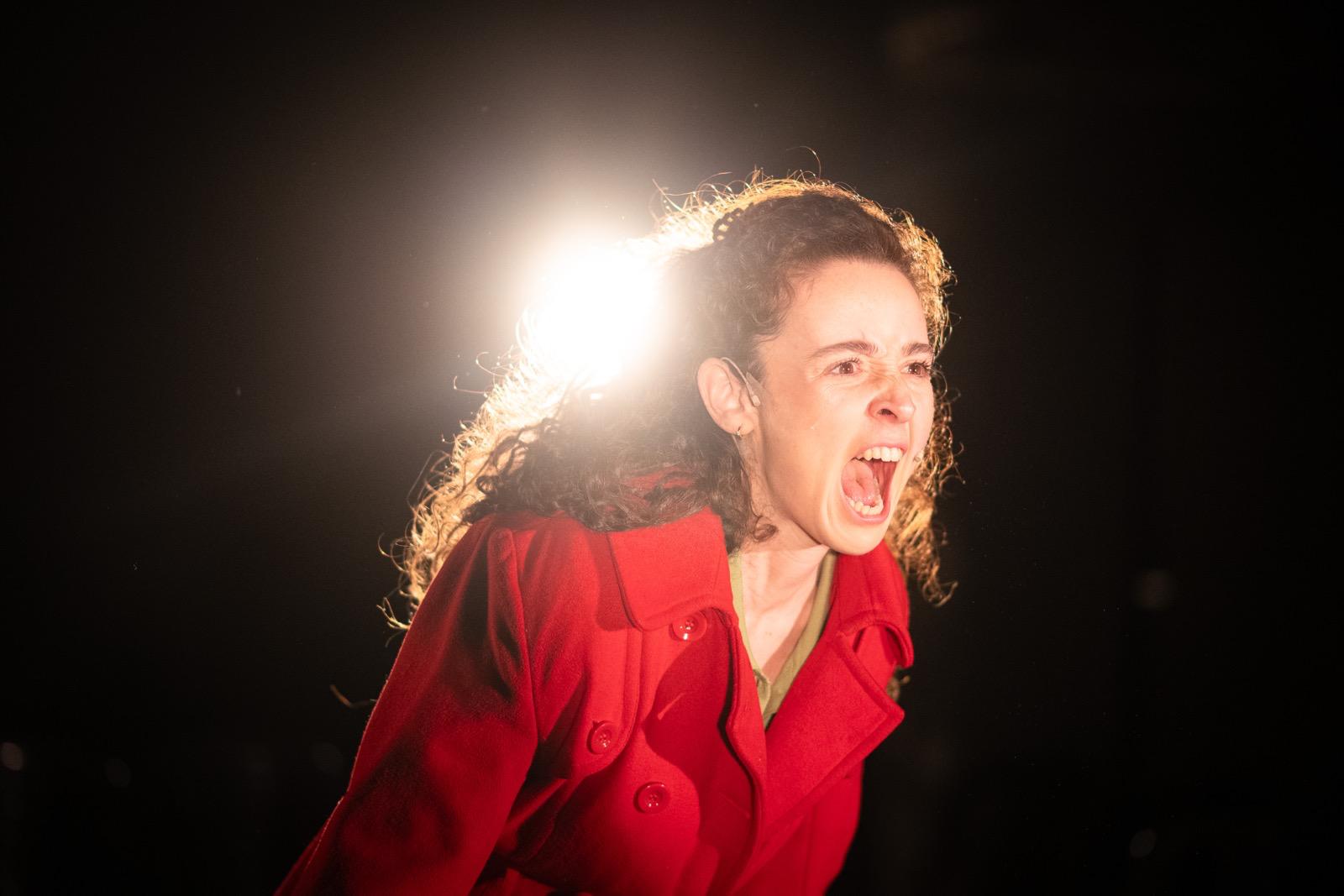
The most compelling work on this theme is “Everything Remains Alive” by (female) director Yarden Gilboa . It deals with post-traumatic stress disorder in a soldier who suffered trauma during his military service in Gaza in 2004, when he had to recover body parts of comrades. His wife, actress Dana Keila, recounts his transformation – and her struggle to maintain a family life amid his despair and unpredictability. The husband is played by an actor, but eventually the real traumatized man appears on stage. This, too, is Israeli reality: every family has its dead and wounded. Dana Keila’s powerful stage presence turns this into a reenactment of her life’s struggle – and at times, it is very difficult to watch.

Israeli theater artists have not forgotten the Palestinian side. In almost every discussion, one hears empathy for Gaza’s population and criticism of the Israeli government. Some hope the ceasefire will hold; the majority, however, believe Hamas will not surrender and that the situation will escalate into another conflict with Iran. The cultural sector will have to contend with this as well.

That women are increasingly asserting themselves on Israeli stages – including as directors – might not be obvious in Tel Aviv’s state theaters. But the festival’s focus on the independent scene highlights female voices more strongly. Hana Vazana-Grunwald, for example, directed “That Is to Say” (based on a novel by Sami Berdugo) at the Arab-Hebrew Theatre in Jaffa. An Israeli-born intellectual tries to teach his elderly mother, who immigrated from Morocco, the Hebrew alphabet – but she neither can nor wants to learn. Instead, she wants to tell him about her life in the diaspora. Mizrahi Jews, especially those from North Africa, still have little political influence in Israel. Actress Pazit Yaron Minkowski turns the mother into a moving portrait of experienced, resigned wisdom, accompanied by almost psychedelic Maghrebi music.

Aya Kaplan has recently become artistic director of the Be’er Sheva Municipal Theater and she puts women’s issues on frontstage. In her play “Permitted to Any Man,” an unhappily married woman seeks a divorce from her Orthodox husband – a process still fraught with obstacles and humiliations in Israel, including appearances before a rabbinical court if the husband refuses consent. Seen as a filmed production, Kaplan stages the conflict as a psychological war, showing a degree of empathy even toward the overwhelmed husband. Other productions from the theater explore family structures in which a husband continues to control a woman’s life even after death. In Till Death Unites Us,” a deceased husband leaves his wife a list of three potential successors – ostensibly a comedy, but ultimately a critique of patriarchy.

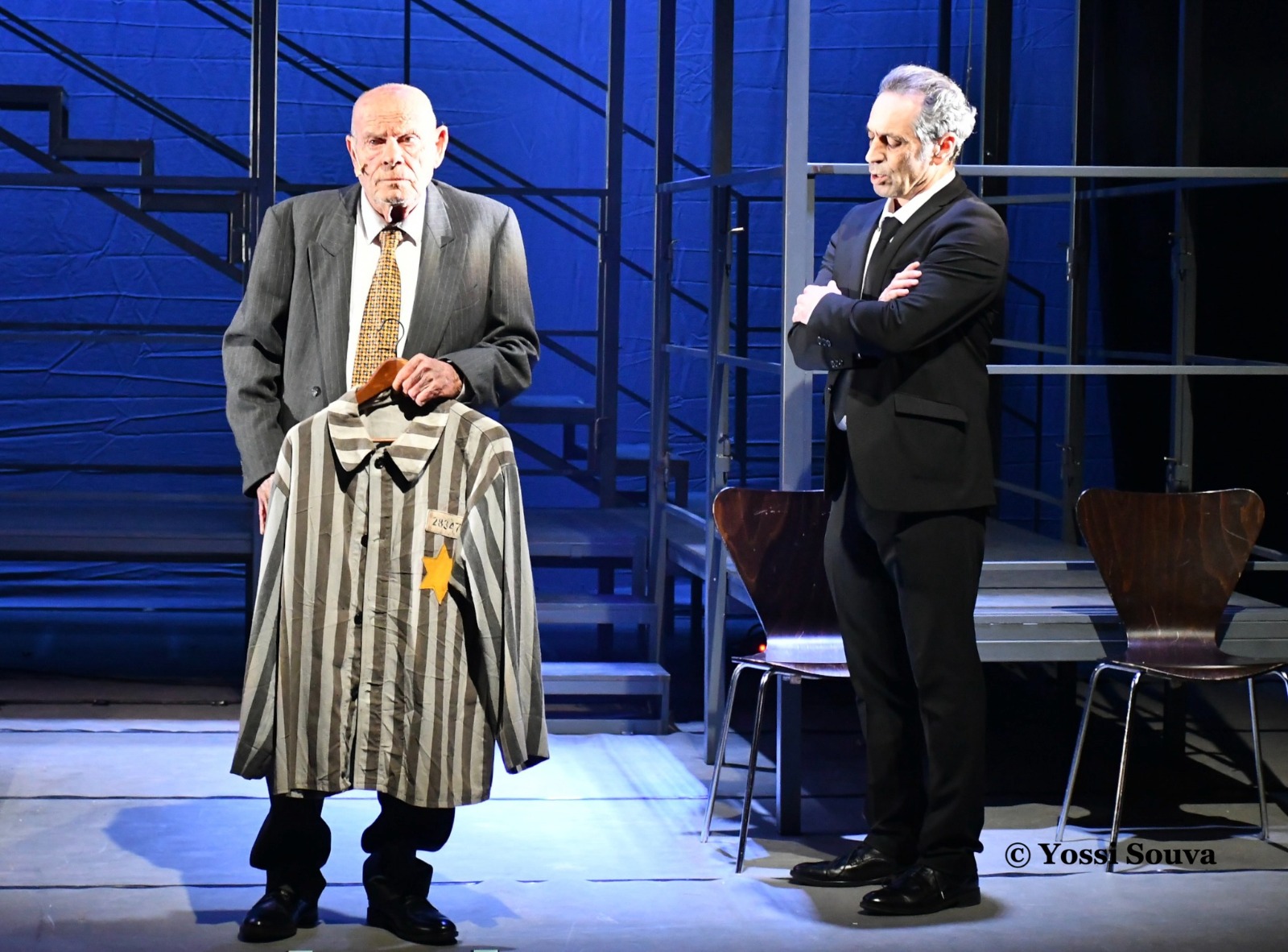
Many contradictions coexist within Israeli society and its theater. Hospital clowns comfort survivors of October 7 and incorporate filmed fragments into performances. Puppets serve as mediators for difficult conversations. The legendary director Yossi Yizraeli, now 86, presented excerpts from his staging of Kafka’s “Metamorphosis” – a brief moment when the sun of world theater seemed to shine. The concept is simple: Gregor Samsa cannot or will not get up – for good reason. But the acting is extraordinary.

Finally, director Itay Tiran led audiences through four hundred years of Jewish history at the Gesher Theater. Souls,” a sweeping work by Roy Chen, uses reincarnation to explore shifting Jewish identities – from Russia to Venice to Israel – touching on Purim plays, carnival, cross-dressing, sex, and contemporary Tel Aviv melancholy. The wandering Jew reappears – even after October 7, forced to pack again in a ravaged kibbutz. He lives here too, as an unspoken central figure of the festival. And he needs a home.

Last year, during the Gaza war, Shimrit Ron of the Hanoch Levin Institute for Israeli Drama organized a kind of emergency festival – only five participants attended. This year, “Isradrama” was almost normal: no rocket alarms, a wide diversity of participants, themes, and forms. But perhaps this is only a pause for breath.

One day after the festival ended, playwright Hadar Galron premiered a sharp satirical cabaret as an actress too: The Final Final Solution. Iran and Hamas have long held such a solution on offer. In Europe, such proposals are taken somewhat less seriously than in Tel Aviv- where the weather is usually bright, but the future remains bleak.

Isradrama 2025 Bericht von Christian Gampert in der FAZ vom 7.April. 2026 (1)
No biz like Shoa biz.

Read more on "No biz like Shoa biz." »

DUO – Interview with Motti Lerner and Odem Radai 

The human mind can either create or survive. It can’t do both at once.
Maybe that’s why, even in the darkest times, we keep creating.
This week, as Israel marks Holocaust Remembrance Day, two new plays finally meet their audience, after waiting in the wings for a ceasfire, which blessedly arrived.( we still keep our fingers crossed that it will last and not turn out to be just a coffee break.)

1. The Eichmann Trial, by Motti Lerner, revisits the banality of evil.
2. The Teacher, by Odem Radai, explores the uneasy space between collective trauma and memory.
Hadar Galron met both playwrights, between sirens, for a short interview:

1. Why now?

What made this the moment you couldn’t not write this play?

M L: This play was written six years ago. The decision to write it was not prompted by a single event, but by many years of attempts to explore and dramatize moments from this profound crisis in our civilization. I think I waited until I felt ready to confront, in dramatic form, the eruption of such human evil in the twentieth century. In other words, I was waiting for an effective concept that would enable me to create a plot that could still speak to audiences today, sixty years after the historic trial of Adolf Eichmann.

O R: I wrote this after October 7th — not in the immediate aftermath, but later, when the shock settled and something else emerged: the scale of what was being hidden. The cover-ups. The lies. We expected the war to pause, to heal. But Israeli society has never truly stopped to process trauma — because when trauma is processed, clarity can emerge, and those in power have never wanted that.

I wanted to trace the threads that define us: what we remember, what we forget, what we process, and what we suppress.


The Teacher

2. Personal connection

What is your own relationship/connection to the Holocaust – and how did it shape the choices you made in this play?

M L: My family immigrated to Israel in 1882, so we did not suffer direct personal loss in the Holocaust. Yet throughout my life I encountered survivors almost every day, and their testimonies moved me deeply. From them I learned a great deal about human evil and the struggle to survive it, although I always felt that such evil lay beyond my full comprehension. I was twelve years old during the historic Eichmann trial, and the seeds of this play were planted as I listened to radio reports from the courtroom in Israel. Those broadcasts awakened in me a need—perhaps even a sense of obligation—to try to understand it as deeply as possible.

O R: I am a third-generation descendant of Holocaust survivors. For my generation – that didn’t grow up directly alongside survivors – the connection to the Holocaust often comes through the “Trip to Poland”- the educational trip in which Israeli high school students visit Holocaust memorial sites in Poland.

On my own trip, something happened that wasn’t part of the plan. The bus ran over an elderly Polish woman cycling near the fence of Treblinka. The trip continued as if nothing had happened. We kept asking what had happened to the woman. Nobody answered. Only on the flight home did one teacher finally respond — not with words. Just a blink. That blink became the heart of the play. An answer without words. A sign that something could not be said, or perhaps could not be faced. What stayed with me was a simple, unsettling realization: I do not control what I know and what I do not know. My memories, my beliefs, my sense of reality — all built from partial information. Someone else decides whether I have access to it or not.

3. The audacity of theatre

What can a stage do with this story that nothing else can?

M L: The theatre has the power to create a plot with fully developed characters who grapple with the evil explored in the play, and thus to offer spectators a deep emotional and intellectual experience, that strengthen them when they face it.

O R: On the trip to Poland, students are constantly asked to imagine. At Treblinka, nothing physically remains. The site looks like an empty field. You are asked to stand there and connect to the roots of your national identity — with nothing to see, nothing to hold.

I use exactly that tension. The ironic gap between what is described and what is actually present on stage becomes the most powerful theatrical tool — allowing the medium itself to make the argument.


Eichmann Trial

4. What it’s really about

What is the question underneath your play -the one you want the audience to leave carrying?

M L: I want the audience to leave the theatre with the understanding that war crimes are not committed by monsters, but by ordinary people, and that one of the greatest challenges of our civilization is to develop a social conscience strong enough to hold such impulses in check.

O R: Memory. Repression. The education system. The way Israeli society deals with trauma — or avoids it. Beneath it all, what I think of as a “memory industry”: a system that uses collective trauma as a tool to strengthen national identity, shaping our inner worlds even when we ourselves are unaware of it.

At its core, one question — simple, concrete, and impossible: Who decides what we know, and what we don’t? And what happens when one small, disruptive experience – a Polish woman on a blue bicycle – threatens to enter the larger story we were always told to remember?

Posted by & filed under Uncategorized.

New Productions of New Israeli Plays

Read more on "New Productions of New Israeli Plays" »
  • Since early March 2026, live performances for audiences have been suspended because of the war, and theaters across Israel have largely kept their venues closed. Even so, new Israeli theatrical work continues to take shape, and several productions that already premiered offer an updated snapshot of contemporary local playwriting.
    • Not a Word to Mother by Noam Gil,  Beit Lessin Theatre; an anti-romantic comedy about Nurit, who discovers that her husband is cheating on her and invites the lover’s husband to join her in a battle for their lost honor, only for the meeting to spiral into wild comic chaos. More details: Production page on the Beit Lessin website
    • Angels in White — written by Giliit Kozva, directed by Dafna Zilberg, Habima National Theatre, premiere: January 8, 2026; an original Israeli suspense drama. More details: Production page on the Habima website
    • The Retreat — written by Bat Hen Sabag, directed by Irad Rubinstein, Cameri Theatre, premiere: January 13, 2026; a suspenseful comedy about a group of friends at a desert retreat that spirals out of control after an unexpected death. More details: Production page on the Cameri website
    • Simple Actions — written by Yotam Guttel, directed by Ariel N. Wolf, Habima National Theatre, premiere: January 17, 2026; a family drama built around three Friday-night dinners. More details: Production page on the Habima website
    • You Shouldn’t Have — written by Tal Miller, directed by Amit Afta, Cameri Theatre, premiere: January 23, 2026; an original Israeli comedic drama. More details: Production page on the Cameri website.
    • The Teacher, or: How Was I Fired from the Ministry of Education? — written and directed by Odem Radai, Tmuna Theatre, premiere: January 27, 2026; a new Israeli fringe production. More details: Production page on the Tmuna website
    • Reserved Seats — written by Eitan Aner, directed by Tamar Keinan, Be’er Sheva Theatre, first performance: February 24, 2026; listed in the source sheet without further description in the notes. More details: Production page on the Be’er Sheva Theatre website

New European productions of Israeli Drama

Read more on "New European productions of Israeli Drama" »

As the war continues, optimism still flickers wherever dialogue is allowed, and there is still good news to share:

WHISTLEWhistle, a monodrama based on the autobiographical story of Yakov Buchan, adapted and performed by Hadar Galron and directed by Hana Vazana Grunwald, was presented at the Weimar Festival, dedicated this year to the theme of “Remembrance” (the Holocaust)
Oh God by Anat Gov is currently running at the theatre in Linz, Austria
✯ A new production is about to open at Schauspiel Stuttgart
Heffetz, directed by Sapir Heller, premiered at Schauspiel Frankfurt
Short by Noa Lazar Keinan is being staged again in Munich and will soon open in Estonia
✯ In France, a new production of Hanoch Levin’s sketches and songs is now playing
In Bucharest, the world premiere of The Eichmann Trial opera by Gil Shohat and Motti Lerner took place
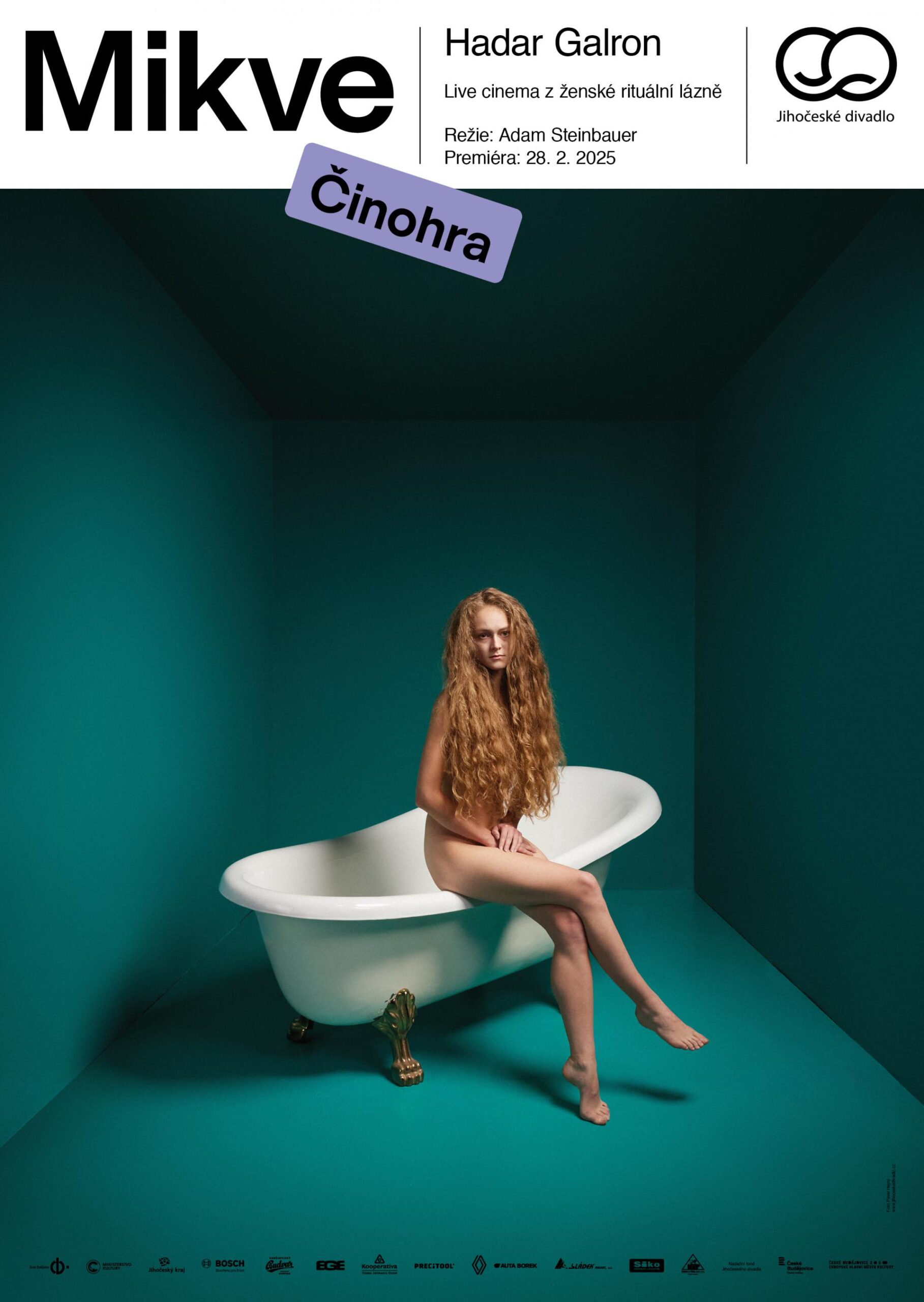
Mikveh by Hadar Galron is celebrating its *21st international production* — opening in *Budapest on April 25, 2025*
✯ And what’s new in Bulgaria? The Marriage Contract by Ephraim Kishon!

Here’s to a little “Swiss boredom” — as Hanoch Levin once hoped for —
and to the speedy return of all those still held hostage.

The Eichmann Trial opera will premiere at the Romanian National Opera

Read more on "The Eichmann Trial opera will premiere at the Romanian National Opera" »

The Romanian National Opera in Bucharest will premiere The Eichmann Trial on March 29, 2025. The opera, composed by Gil Shohat, features a libretto by renowned playwright Motti Lerner, based on his stage play of the same name, which was performed last year at Bucharest’s National Theatre.

Set against the backdrop of the 1961 trial of Nazi war criminal Adolf Eichmann in Jerusalem, the opera unfolds not only in the courtroom but also behind the scenes. It explores the prosecution’s challenges, the legal confrontations between Eichmann and his defense attorney, and the political pressures exerted by West Germany on Israel to avoid addressing German collective guilt.

This collaboration between the Romanian National Opera and the National Theatre of Bucharest was spearheaded by Noam Semel, Chairman of the Institute for Israeli Drama, and Tova Ben Nun, President of the Jewish Education Network in Romania.


ISRA-DRAMA 2024: Building Cultural Bridges

Read more on "ISRA-DRAMA 2024: Building Cultural Bridges" »

ISRA-DRAMA 2024 is holding the Exposure online this year because of the war.

This year’s theme is “Building Cultural Bridges,”because it feels more urgent than ever. While politics and “The News” are set on creating more conflict in the “divide and rule” style – art creates a space for empathy, dialogue, and shared humanity. ISRA-DRAMA 2024 is our way of saying that even in uncertain times, storytelling must endure.

This year’s program is as dynamic as ever, designed for easy navigation and discovery. Highlights include:

  • Panels that delve into War and Theatre, exploring documentary storytelling and the role of humor in crisis, featuring both Israeli and Palestinian voices.
  • A special Playmarket that introduces you to some of Israel’s talented playwrights who are not in this year’s exposure lineup.
  • At the heart of it all, you’ll find the selected plays in full—ready for you to experience the creativity and depth of Israeli theatre from wherever you are.
  • https://exposure.dramaisrael.org/

Hanoch Levin’s comedy, The Hesitator, in Bratislava

Read more on "Hanoch Levin’s comedy, The Hesitator, in Bratislava" »

Hanoch Levin’s comedy, The Hesitator, explores the humorous yet poignant struggles of a man perpetually caught between his ailments and his entangled relationships with women. Torn between three potential partners, he secretly yearns for a fourth—an unattainable beauty. When he finally makes his choice, he’s consumed by regret, convinced he’s chosen wrong.

In this sharp and satirical portrayal of indecision, Levin delves into the human tendency to idealize what’s out of reach, revealing the bittersweet truth: happiness often seems to lie on the road not taken.