

DUO – Interview with Motti Lerner and Odem Radai
The human mind can either create or survive. It can’t do both at once.
Maybe that’s why, even in the darkest times, we keep creating.
This week, as Israel marks Holocaust Remembrance Day, two new plays finally meet their audience, after waiting in the wings for a ceasfire, which blessedly arrived.( we still keep our fingers crossed that it will last and not turn out to be just a coffee break.)
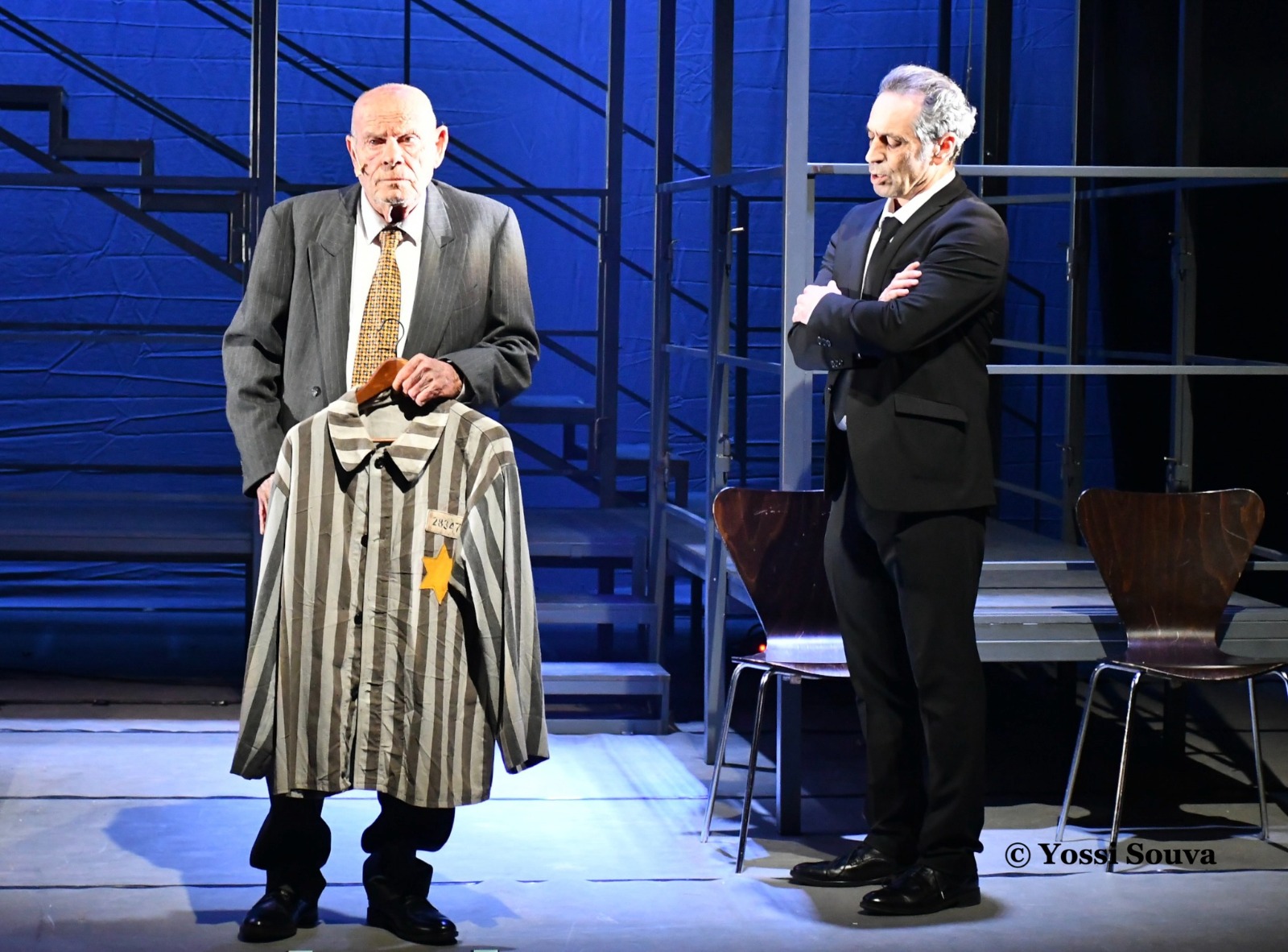
1. The Eichmann Trial, by Motti Lerner, revisits the banality of evil.
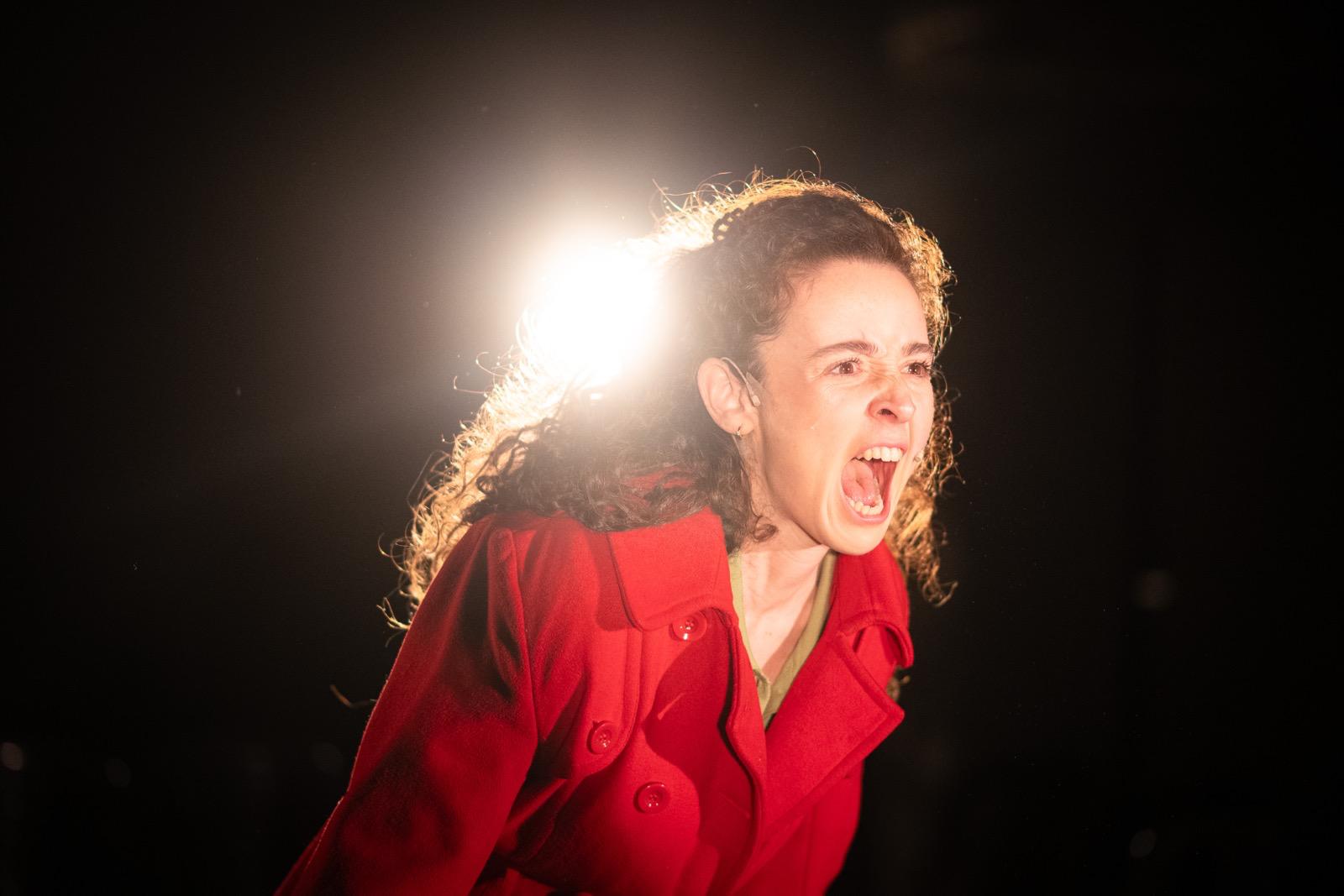
2. The Teacher, by Odem Radai, explores the uneasy space between collective trauma and memory.
Hadar Galron met both playwrights, between sirens, for a short interview:
1. Why now?
What made this the moment you couldn’t not write this play?
M L: This play was written six years ago. The decision to write it was not prompted by a single event, but by many years of attempts to explore and dramatize moments from this profound crisis in our civilization. I think I waited until I felt ready to confront, in dramatic form, the eruption of such human evil in the twentieth century. In other words, I was waiting for an effective concept that would enable me to create a plot that could still speak to audiences today, sixty years after the historic trial of Adolf Eichmann.
O R: I wrote this after October 7th — not in the immediate aftermath, but later, when the shock settled and something else emerged: the scale of what was being hidden. The cover-ups. The lies. We expected the war to pause, to heal. But Israeli society has never truly stopped to process trauma — because when trauma is processed, clarity can emerge, and those in power have never wanted that.
I wanted to trace the threads that define us: what we remember, what we forget, what we process, and what we suppress.
2. Personal connection
What is your own relationship/connection to the Holocaust – and how did it shape the choices you made in this play?
M L: My family immigrated to Israel in 1882, so we did not suffer direct personal loss in the Holocaust. Yet throughout my life I encountered survivors almost every day, and their testimonies moved me deeply. From them I learned a great deal about human evil and the struggle to survive it, although I always felt that such evil lay beyond my full comprehension. I was twelve years old during the historic Eichmann trial, and the seeds of this play were planted as I listened to radio reports from the courtroom in Israel. Those broadcasts awakened in me a need—perhaps even a sense of obligation—to try to understand it as deeply as possible.
O R: I am a third-generation descendant of Holocaust survivors. For my generation – that didn’t grow up directly alongside survivors – the connection to the Holocaust often comes through the “Trip to Poland”- the educational trip in which Israeli high school students visit Holocaust memorial sites in Poland.
On my own trip, something happened that wasn’t part of the plan. The bus ran over an elderly Polish woman cycling near the fence of Treblinka. The trip continued as if nothing had happened. We kept asking what had happened to the woman. Nobody answered. Only on the flight home did one teacher finally respond — not with words. Just a blink. That blink became the heart of the play. An answer without words. A sign that something could not be said, or perhaps could not be faced. What stayed with me was a simple, unsettling realization: I do not control what I know and what I do not know. My memories, my beliefs, my sense of reality — all built from partial information. Someone else decides whether I have access to it or not.
3. The audacity of theatre
What can a stage do with this story that nothing else can?
M L: The theatre has the power to create a plot with fully developed characters who grapple with the evil explored in the play, and thus to offer spectators a deep emotional and intellectual experience, that strengthen them when they face it.
O R: On the trip to Poland, students are constantly asked to imagine. At Treblinka, nothing physically remains. The site looks like an empty field. You are asked to stand there and connect to the roots of your national identity — with nothing to see, nothing to hold.
I use exactly that tension. The ironic gap between what is described and what is actually present on stage becomes the most powerful theatrical tool — allowing the medium itself to make the argument.
4. What it’s really about
What is the question underneath your play -the one you want the audience to leave carrying?
M L: I want the audience to leave the theatre with the understanding that war crimes are not committed by monsters, but by ordinary people, and that one of the greatest challenges of our civilization is to develop a social conscience strong enough to hold such impulses in check.
O R: Memory. Repression. The education system. The way Israeli society deals with trauma — or avoids it. Beneath it all, what I think of as a “memory industry”: a system that uses collective trauma as a tool to strengthen national identity, shaping our inner worlds even when we ourselves are unaware of it.
At its core, one question — simple, concrete, and impossible: Who decides what we know, and what we don’t? And what happens when one small, disruptive experience – a Polish woman on a blue bicycle – threatens to enter the larger story we were always told to remember?