Rami and Bassam: Apeirogon /
Avner Ben-Amos
 | |
|
Drama Text in:  he
English
he
English  |
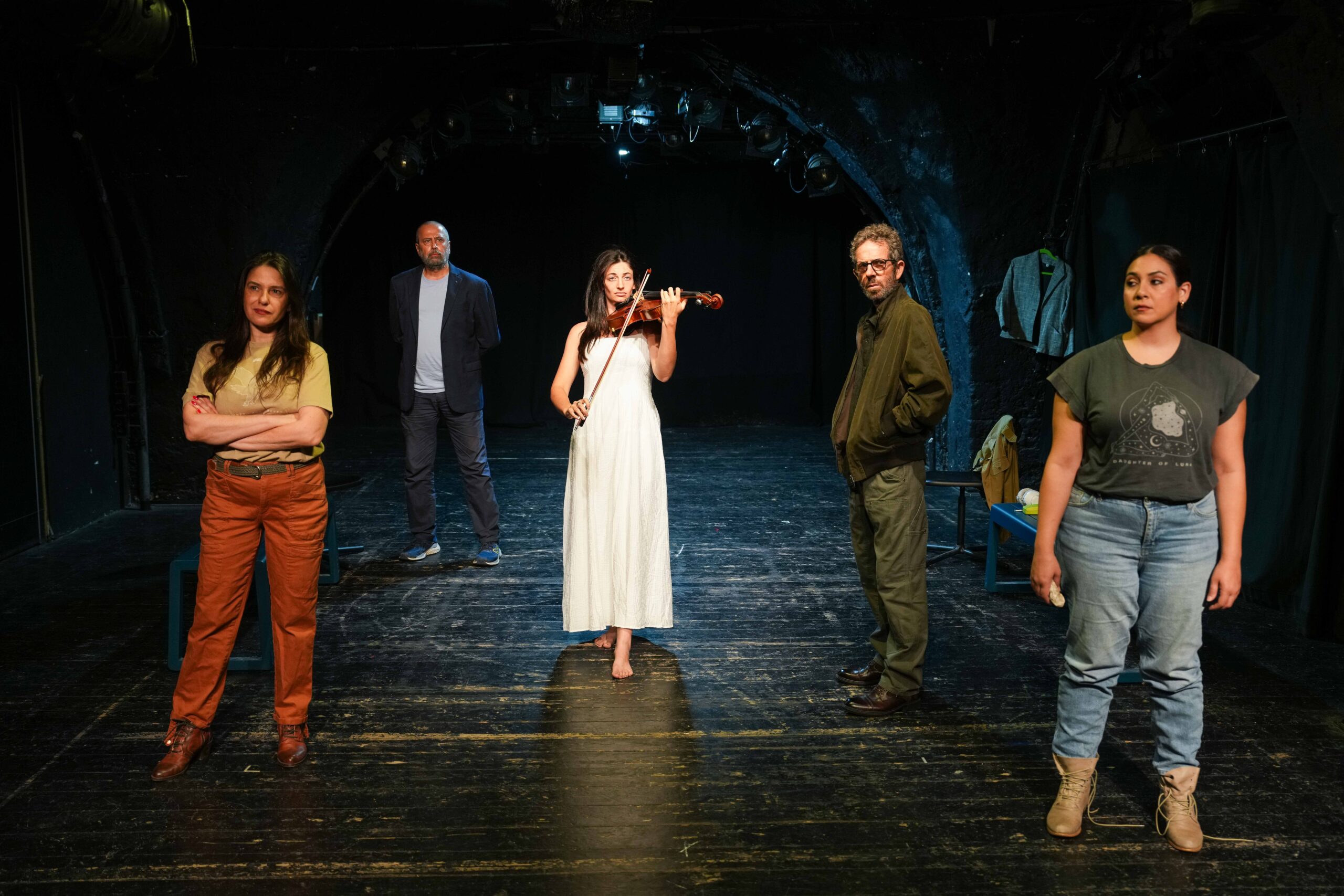
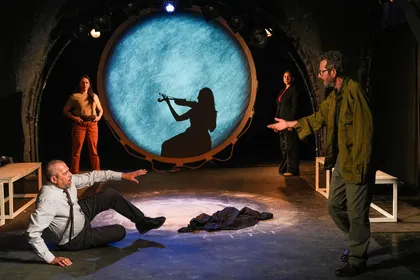
The play tells the story of four real-life figures: Rami Elhanan, an Israeli from Jerusalem, and his daughter Smadar; Bassam Aramin, a Palestinian from Anata, and his daughter Abir. After the untimely deaths of their respective daughters – Smadar was killed by a Palestinian suicide bomber and Abir by an Israeli soldier – Elhanan and Bassam became co-chairmen of the Israeli-Palestinian Parents Circle Families Forum, in which bereaved families work together toward peace. The complex journey undertaken by both fathers toward friendship and partnership in Israeli-Palestinian dialogue is depicted in the play through twenty-two characters, played by four actors (two men and two women) and the use of animation. Rami was an apolitical graphic designer who raised four children until his life was shaken by the 1997 killing of his daughter in Jerusalem. At first he sought revenge, but after meeting the people of the Parents Circle he gradually changed his mind, joined the organization, and eventually became its co-chair. Bassam’s parallel story began in 1985 at the age of seventeen, when he threw a hand grenade at an Israeli military vehicle and was sentenced to seven years in prison. While incarcerated, he learned about the Holocaust, and gradually became convinced that non-violent action was the only way to fight against Israeli occupation. After his release he married, had six children, and was driven by his convictions to co-found Combatants for Peace — an Israeli-Palestinian peace organization. Soon after his daughter Abir was killed by an Israeli soldier in 2007, he joined the Parents Circle as well. The play follows these two main characters as they navigate their difficult and transformative paths, exploring their connections with family members as well a range of Israeli and Palestinian figures including soldiers, policemen, physicians, a prison guard and a judge. Thus, the story of Rami and Bassam unfolds via a mosaic of voices and multiple points of view, acting as a prism into the complicated relationship between Israelis and Palestinians following the 1967 occupation of the West Bank. This is a play about the ability to change and to choose, instead of vengeance, the path of dialogue and reconciliation.
|
The characters |
Female:2 Male:2 Other:1 Total:5 |
Productions |
Premierre2025 Jaffa Theatre- Arab Hebrew TheatreProduction page theatersJaffa Theatre- Arab Hebrew Theatre |